
Ticketing Platform Fees Compared: What You Really Pay
Ticketing platform fees are the single biggest hidden cost in running events, and they are also the hardest to compare because every provider presents them differently. One quotes a percentage, another adds a fixed amount per ticket, a third bundles payment processing on top. This guide breaks the models down side by side so you can see what you actually pay before you commit.
The goal is simple: know your real cost per event, not the number on the pricing page.
The Three Fee Models
Almost every platform uses one of three approaches.
Percentage per ticket. The platform takes a share of each sale, commonly 2 to 5 percent, sometimes more. It scales with your revenue, which means your cost rises every time you succeed.
Percentage plus a fixed amount. The same percentage with a small flat charge added to every ticket, often somewhere around 0.30 to 0.99 per ticket. This hits low-priced tickets hardest, because the fixed part is a bigger share of a cheap ticket.
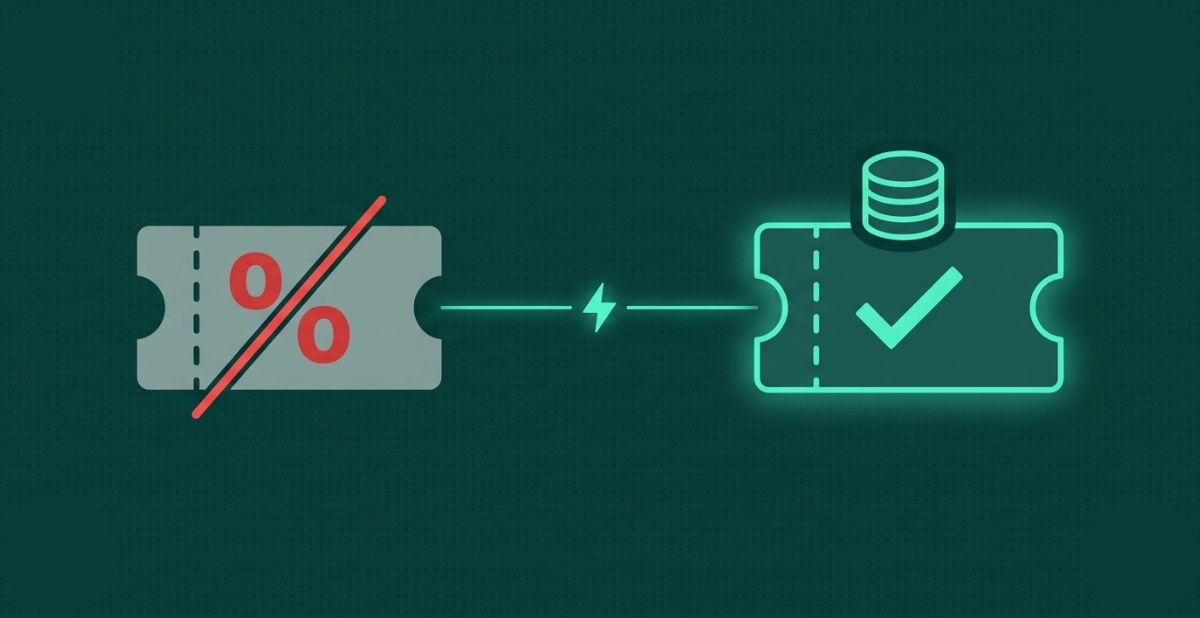
Flat subscription. You pay a fixed monthly or yearly amount and keep everything you sell. Your cost is known in advance and does not move with volume. TicketPayGo uses this model, running on your own WordPress site with direct payment and no commission per ticket.
A Side-by-Side Cost Example
Numbers make the difference obvious. Take one event: 1,000 tickets at 25 each, so 25,000 in sales.
| Fee model | Typical rate | Cost on this event |
|---|---|---|
| Percentage per ticket | 4% | 1,000 |
| Percentage plus fixed | 4% + 0.50 | 1,500 |
| Flat subscription | fixed monthly | the same every month |
With a percentage model, sell twice as many tickets and the fee roughly doubles. With a flat subscription, the cost does not change. The more you sell, and the more often you run events, the wider that gap becomes.
Where the Break-Even Sits
A flat subscription is not automatically cheaper. It wins past a certain volume.
If you run one small event a year with fifty tickets, a percentage model probably costs less than any subscription. If you run regular events, sell at real volume, or work with tight margins, the percentage model quietly becomes the expensive option. The break-even point is the moment your total percentage fees would exceed a fixed monthly price. Work it out with an event you have already sold: take your ticket count, multiply by price, apply the percentage, and compare.
For most organizers who take ticketing seriously, that calculation lands on the side of a fixed cost.
What to Watch for Beyond the Headline Rate
The advertised percentage is rarely the whole story. Check for payment processing charged separately, fees passed to the buyer at checkout that raise your effective price, payout delays that hold your money, and charges on refunds or free tickets. A platform can look cheap on the headline rate and still cost more once these are added.
Direct payment sidesteps most of this. When money flows straight to your own account, there is no platform layer taking a cut or holding funds between the sale and your payout.
Frequently Asked Questions
How much do ticketing platforms charge? Most charge 2 to 5 percent per ticket, often with a small fixed amount added, and sometimes payment processing on top. Flat-subscription platforms charge a fixed fee instead and take nothing per ticket.
What is a fair ticketing fee? Fair depends on volume. At low volume a small percentage is reasonable. At higher volume a flat fee is usually fairer, because you are not paying more simply for selling more.
Can I avoid per-ticket fees entirely? Yes. Platforms built on a flat subscription and direct payment do not charge per ticket. Read why per-ticket fees are not a requirement for the full picture.
What to Do Next
Take your last event, apply each model above, and see which one actually costs you least at your volume. If a flat fee comes out ahead, see TicketPayGo pricing to compare it directly, or read our comparison of the best WordPress ticketing plugins for 2026.